When the AI workspace can be copied, knowledge becomes a product

A PDF can be forwarded. A prompt can be pasted. Neither carries the whole environment where the work actually gets done.
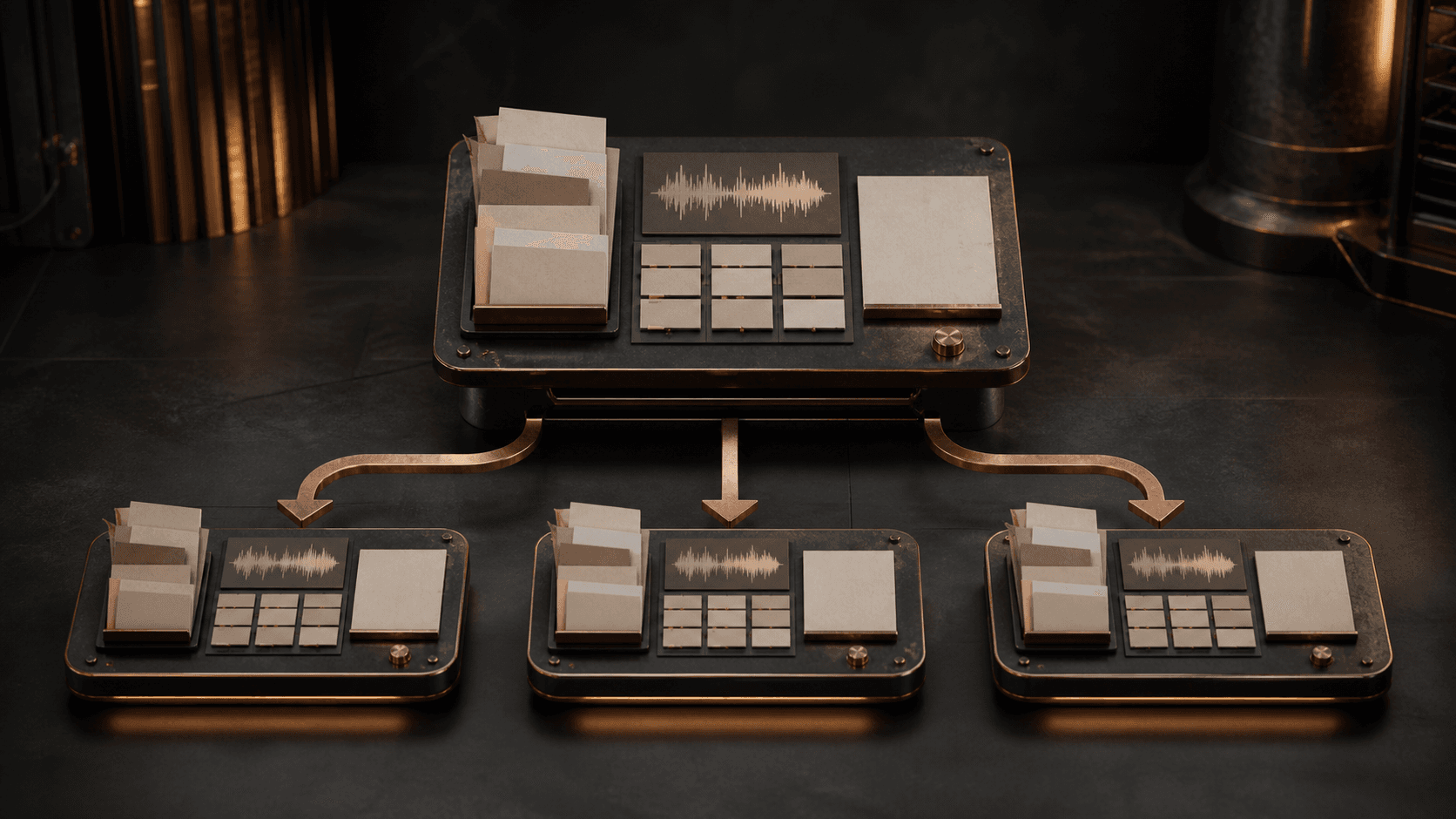
Google's new copying capability in Gemini Notebook changes that unit. With the right permission, a recipient can receive a separate version containing sources, generated studio content, generation prompts and chat configuration. They can then reshape the copy without changing the original.
That turns a proven workspace into more than a collection of files. It can become a knowledge product.
Copying changes what can be distributed
Training, analysis and consulting methods are often delivered as documents, videos and templates. The recipient gets the content but must rebuild the working environment: load the sources, organize the material and explain to the AI how it should be used.
Gemini Notebook can now move more of that environment in one copying step. Google says the capability is available to Workspace customers and personal Google accounts with access to Gemini Notebook. The owner decides whether copying is allowed in the sharing settings; Google says the option is on by default.
Source: Google Workspace Updates – Make a copy of a notebook in Gemini Notebook
This is not a marketplace or a new file format. The commercial change is simpler: you can distribute a working starting point instead of merely describing how the recipient should build one.
The workspace — not just the files — comes along
Google says an authorized copy can contain:
- The sources behind the notebook. Drive files are included only when the recipient has permission to access and copy the original file.
- Studio content, including Audio Overviews, Video Overviews, study guides, flashcards, quizzes, and slide decks.
- Behavior around the material, including artifact-generation prompts and custom chat configuration.
Personal chat history and user-created notes are not transferred. That boundary matters: the product is the prepared environment, not the private work of previous participants.
Source: Google Workspace Updates – what a notebook copy includes
A static guide can describe which questions work well. A copied workspace can already contain the sources, the way those questions are asked and the first useful output formats. The recipient begins further ahead.
A copy is a fork, not a subscription
Google also says a copy does not synchronize with the original. Later changes by the creator will not overwrite the recipient's version.
That is useful when a teacher wants students to add their own notes or when a consulting client needs to adapt a method to a project. The same property creates a new product problem: improvements do not spread automatically.
Treat the copy as a fork — an independent version with the same starting point and its own future. Gemini Notebook is not a version-control system. When sources, instructions or the method change, the creator must decide how to describe and distribute a new edition.
That is a better problem than rebuilding everything for every delivery, but it is still real work.
A consulting deliverable can become a starting point
A training lead can share the same source-backed foundation with each cohort while participants create their own exercises. An internal process owner can give every department a common method that is then extended with local documents. A consultant can hand over the analysis environment behind a recommendation, not only the presentation containing the conclusions.
This changes what the customer buys. Value depends less on the page count and more on how quickly the recipient can make the method their own.
It also allows a sharper product boundary. The original can remain the reference edition. The copy becomes the customer's workspace. New editions can be sold as updated source packs, new exercises or revised methodology — without pretending that old copies update themselves.
The new job is product stewardship
When copying becomes easy, the bottleneck moves. The question is no longer just “can we make a notebook?” but “which knowledge deserves a durable product form?”
A useful knowledge product needs a clear job. It should help the recipient make a decision, learn a bounded subject or perform recurring work. A large archive of unsorted sources does not improve merely because it can be copied.
The creator must also separate stable content from changing content. A method may last for years while prices, rules, and product features age quickly. Because the copies are independent, edition dates and short change notes become part of the delivery rather than administrative decoration.
Done well, this is not “AI in a folder.” It is a considered starting point whose original edition remains worth copying.
Start with a method that already deserves to be copied
Do not build a generic AI notebook and search for a problem afterward. Choose a delivery that already repeats: employee onboarding, customer research, course preparation or an internal analysis that starts every project.
Add the smallest source set that makes the method credible and one studio format the recipient will actually use. Then let two people copy the workspace. The interesting question is not whether they find the button. Watch what they change, what they keep and where they still need your help.
If the same core survives two different users, you have the beginning of a product. If every copy needs a complete rebuild, you still have a consulting deliverable — just inside a new interface.
For organizations that already have a repeatable method but not yet a product form, Tool Forge is the natural path from a working practice to a focused internal or customer-facing solution.
FAQ
What is included when someone copies a Gemini Notebook?
Google says sources and studio content can carry over, including Audio and Video Overviews, study guides, flashcards, quizzes, slide decks, generation prompts and custom chat configuration. Drive sources require permission to access and copy the file.
Does a copied notebook stay synchronized with the original?
No. The copy is independent and later changes to the original do not overwrite it. Personal chat history and user-created notes are not transferred either.
Who can benefit from a copyable knowledge product?
It fits best when a training program, analysis or internal method already repeats and uses a stable source base. The value is a working starting point that recipients can adapt, not merely instructions for building it.
The Forge newsletter
Get new articles in your inbox
Pick the topics you care about. No noise, at most one email a week.
We follow GDPR. Unsubscribe anytime.