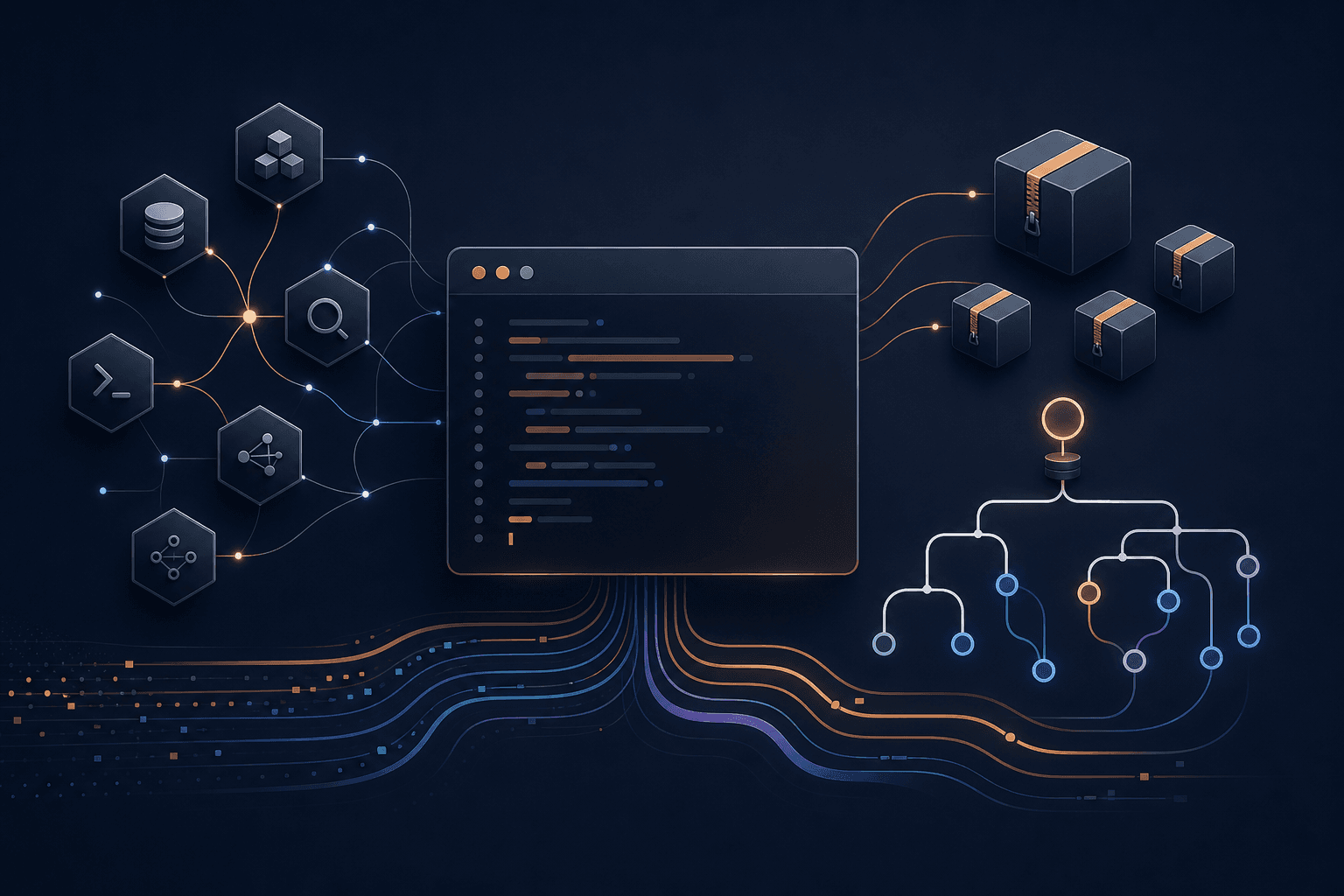
AI is leaving the chat box: workflows are starting to run themselves

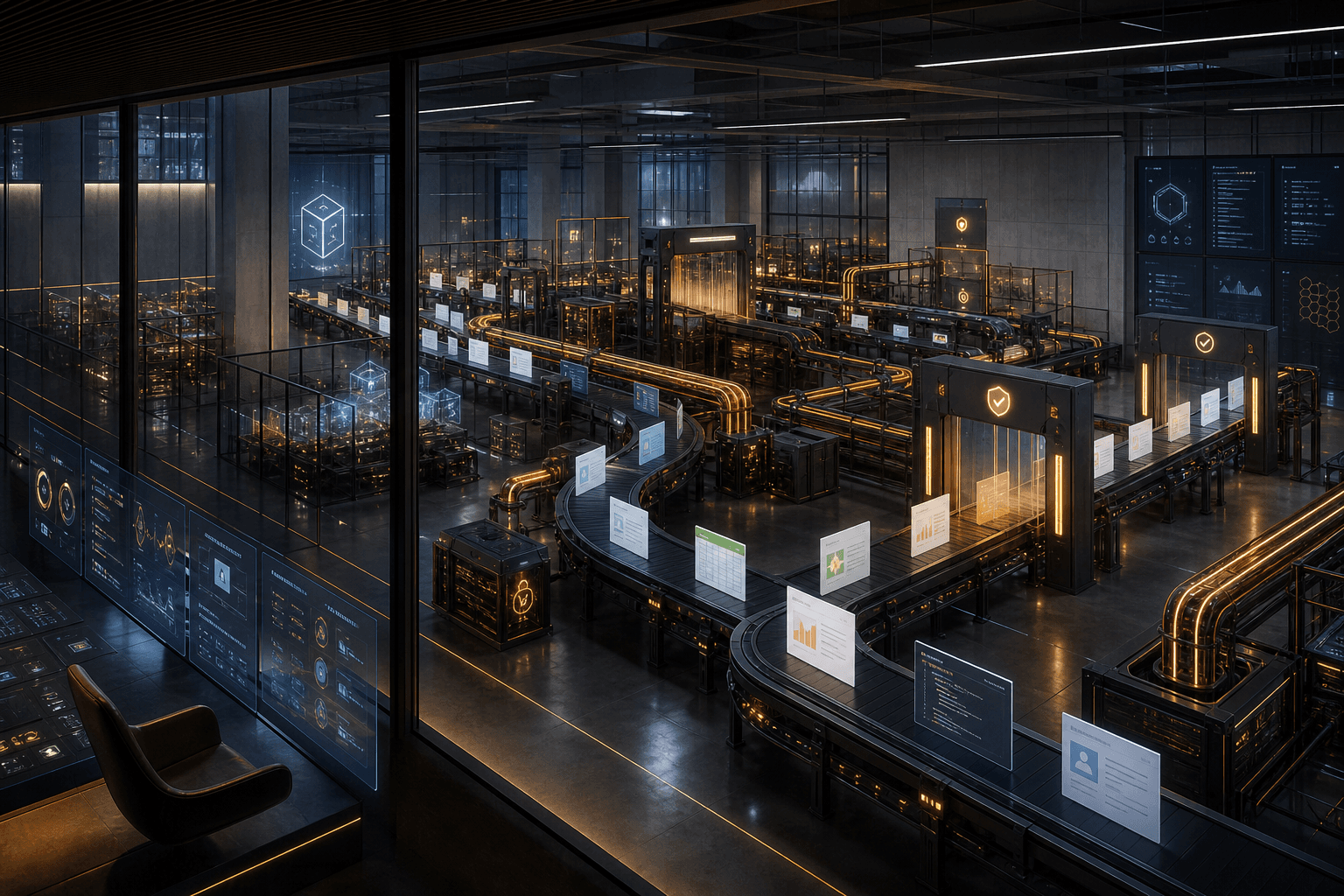
The big shift right now is not that models can write slightly better text. It is that AI is leaving the visible chat box and becoming a work layer that runs in the background: analyzing data, building presentations, preparing meetings, keeping connections alive and handling errors without a human pressing enter.
That sounds like productivity. But it is also the beginning of a new governance problem: who owns the work when the task is no longer performed by a person inside one tool, but by a scheduled AI workflow across several systems?
🎧 This episode in short
The podcast opens with a simple image: we have moved from the calculator to the factory floor. The old AI world was one prompt in, one answer out. The new world is made of autonomous, asynchronous workflows that can connect Office documents, CRM data, Slack context, web searches, coding environments and APIs.
The important thing is not one individual product update. The important thing is the pattern:
- AI becomes coordinated: not a sidebar in one document, but an actor moving across multiple apps.
- AI becomes scheduled: work can start before the human even opens the laptop.
- AI becomes governed: admin controls, approved workflows and versioning become as important as the prompt.
- AI becomes operations: error handling, terminal signals, model identifiers and keep-alives decide whether the agent works in production.
🧩 Anthropic: from Office assistant to coordinated workspace
The Anthropic section focuses on how Claude is moving from isolated assistant to coordinated workspace. The point is not just that AI can summarize a Word document. The point is that Claude can analyze data in Excel and help turn the result into a PowerPoint presentation without the user manually copying between tools.
That is a bigger shift than it first appears. Once AI can move across applications, the question changes from “what can the model answer?” to “which work steps is the model allowed to perform?”
That is why governance becomes central:
- Admin enablement: the organization has to explicitly turn the capability on.
- Limited surfaces: the tool should not be able to control any random third-party app.
- Clear permissions: the agent needs the right access, but not more than necessary.
- Isolated environments: especially when AI is allowed to act inside code and terminal workflows.
The podcast also covers Claude Code updates such as model discovery through a gateway, better authentication handling in headless environments and commands for clearing project context. These may sound technical, but they are exactly the details that separate a demo from a tool that can be used every day.
🍱 Perplexity: workflows as AI “meal kits”
Perplexity is presented as the more packaged side of the same development. Instead of giving the user an empty chat field, they offer ready-made workflows: similar to a meal kit where the ingredients, recipe, and order of operations are already defined.
That makes AI more useful for ordinary teams. A sales rep does not need to know which sources to check before a meeting. A workflow can pull CRM history, current company information, Slack context and recent news, then create a briefing before the meeting starts.
The same logic applies to document review. It is not just about spelling and grammar, but about checking reasoning, numbers and sources.
But the podcast also raises the downside: we may be trading SaaS sprawl for workflow sprawl.
When more than 70 workflows can run in the background, the organization needs to know:
- Which workflows are approved?
- Who is allowed to schedule them?
- Which data sources can they read?
- How are cost, quality and failures monitored?
- Who is responsible when an automated research workflow draws the wrong conclusion?
This is where AI governance becomes practical. It is no longer enough to control who may “use AI”. You have to control which workflows may run.
🛠️ OpenAI and Mistral: the infrastructure behind agentic operations
The second half of the episode moves into the engine room. OpenAI and Mistral show how much of the agent revolution is about boring, but critical, operational details.
OpenAI’s Agents SDK updates include clearer model refusal handling, better error behavior, WebSocket keep-alives and terminal signals in sandboxed environments. These may sound like small developer details, but they matter when AI agents are supposed to run inside real systems.
A concrete example: if an agent refuses a task for safety reasons, the application should not get stuck in an endless retry loop or return empty JSON. It should throw an understandable error that the developer can handle.
The same applies to long-running connections. If an AI agent is sitting in a voice session or acting as a proxy, the connection needs to stay alive even when the human is silent. Otherwise, the system fails because of infrastructure, not intelligence.
The Mistral section is a reminder of how fragile production can be. A model identifier with the wrong dot or hyphen can be enough to break an agent. In experiments, that may be a nuisance. In production, those details become incidents.
⚠️ The real risk: invisible work without ownership
The most interesting part of the episode is not that AI can do more. It is that the work becomes less visible.
When a human writes a prompt in a chat window, we can roughly see what is happening. When a scheduled workflow runs in the background, fetches data, summarizes, compares, updates and forwards the result, much of the friction that used to act as control disappears.
That demands new habits:
- Run dangerous agent flags only in isolated sandboxes or trusted CI environments.
- Log which workflows run, when they run and which sources they use.
- Version workflows the same way you version code.
- Set budgets and alerts for background costs.
- Add human review where wrong decisions have real-world impact.
This is the difference between “testing AI” and introducing AI as work infrastructure.
🔮 Thoughts on how this affects the future
We are heading toward a daily reality where companies have not just employees and software, but also a growing layer of scheduled AI workers that never sleep. They will prepare meetings, review documents, monitor news, update systems and perhaps soon negotiate with other companies’ agents.
That makes AI less magical and more operational. The winners will not necessarily be the ones with the most experiments, but the ones with the best control systems around those experiments: clear workflows, correct permissions, robust error handling and a culture where automation is reviewed as seriously as code.
The chat box was only the starting point. The next phase is about leading a work layer that runs even when you are not watching.
The Forge newsletter
Get new articles in your inbox
Pick the topics you care about. No noise, at most one email a week.
We follow GDPR. Unsubscribe anytime.