Google Antigravity release notes: Antigravity Agent reaches the Gemini API
Part of the series: Google Antigravity release notes
 Hammer Automation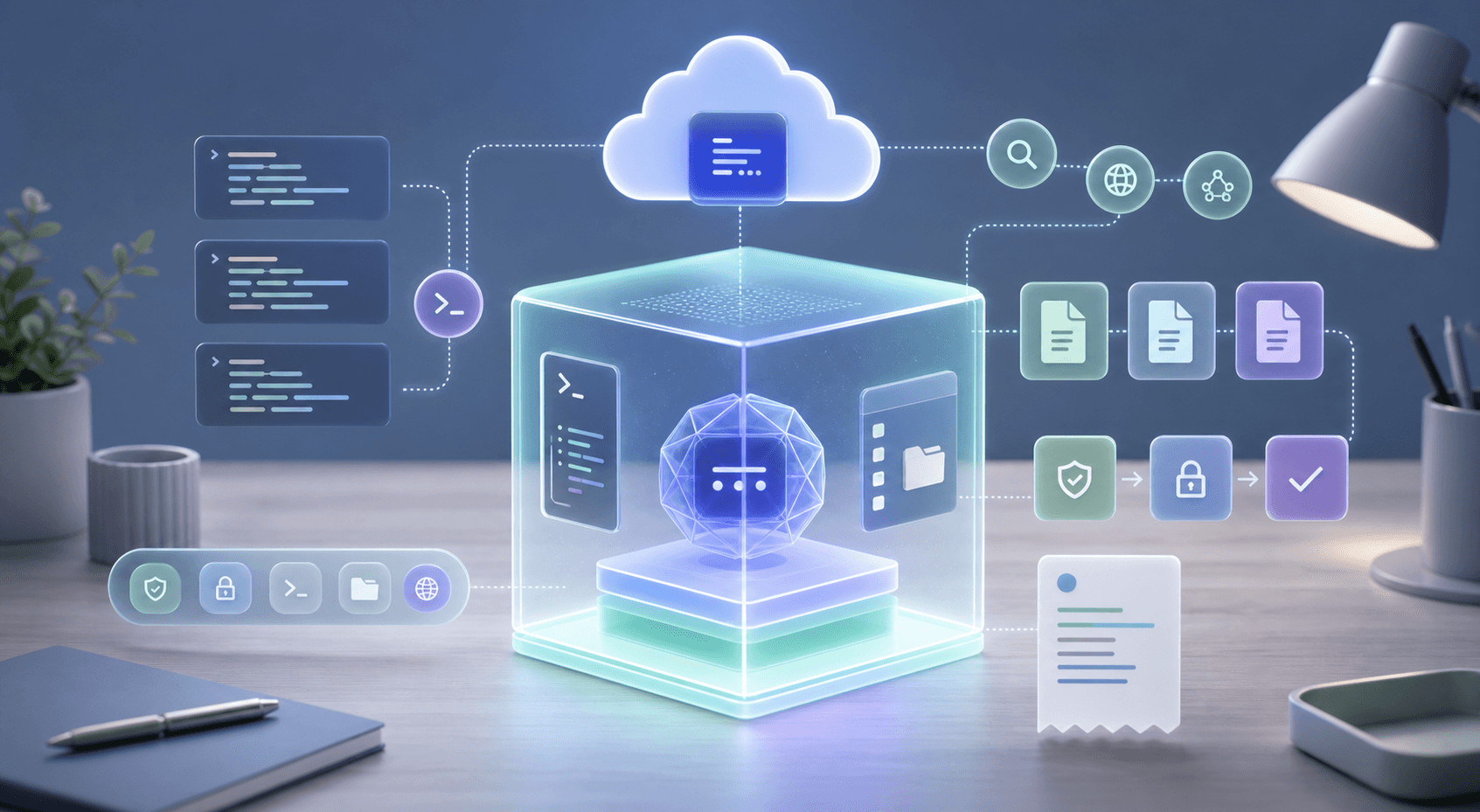
Google Antigravity did not get a newer public app version after 2.1.4. The useful new signal is the API page Google updated on June 17: Antigravity Agent is now documented as a managed agent in the Gemini API and Google AI Studio.
Antigravity is Google's agentic development environment. A managed agent is an agent Google runs for you in an isolated environment, instead of forcing you to build the whole execution layer around the model yourself. That makes this release-note signal relevant for teams that want Antigravity-style work outside the IDE.
Source: Antigravity Agent, Google AI for Developers, last updated 2026-06-17. Background: Google Antigravity Changelog still shows 2.1.4 from June 11.
Google Antigravity release notes: Antigravity Agent becomes an API workflow
The practical part of the documentation is clear enough: an Interactions API request can create or reuse a remote Linux sandbox where the agent reasons, runs code, manages files and fetches web content. Google lists the model as antigravity-preview-05-2026, with environment="remote" in the examples.
For developers, this means Antigravity is not only an IDE workspace. The same agent harness can also be called from code when a team wants an agent to run research, produce a review packet or work inside a controlled sandbox before anything touches real systems.
There are limits worth reading before anyone builds on it. The API page says the agent currently supports only text and image as multimodal input, not audio, video or documents. It also says file_search, computer_use, google_maps and mcp are not supported for Antigravity Agent in this form. This is a preview, so schemas and behavior may change.
Source: Antigravity Agent documents client.interactions.create(...), agent="antigravity-preview-05-2026", environment="remote", the default tools code_execution, google_search and url_context, plus the multimodal and tool limitations.
What Nordic automation teams should test
This matters most for teams already asking how a coding or research agent can do real work without getting too much access. Google describes the sandbox as isolated, but Agents Overview also says managed agents have unrestricted outbound network access by default. That is not a reason to avoid integration. It is a reason to put the controls first.
Start with a small API run where you limit network access, tools and credentials. Use environment variables, secret managers, short-lived tokens, scoped API keys and clear approval gates. Ask the agent for a run receipt: which sources it read, which tools it used, which assumptions it made and what a human needs to review.
Source: Agents Overview says sandboxes have unrestricted outbound network access by default, network access can be controlled with an allowlist, external tools should use minimum permissions and agent outputs should be verified before production use.
Short example: use the new Antigravity feature
Human step:
- Create an Interactions API request using Google's example with
agent="antigravity-preview-05-2026"andenvironment="remote". - Restrict tools if the test only needs search and URL reading. Google's example shows
tools=[\{"type":"google_search"\}, \{"type":"url_context"\}]for that mode. - Do not give the agent production credentials in the first test. Use a separate test key or a sandboxed source.
Agent prompt:
You are running in the Antigravity Agent remote sandbox. Review the public docs and repo notes I provide. Create a short implementation receipt: goal, files or URLs inspected, tool calls used, risks, and the next two human decisions. Do not call external systems unless they are in the allowed sources.
Good output should:
- Separate verified source facts from agent assumptions
- Show which files, URLs and tools were actually used
- Propose no more than two next decisions for a human
- Flag access, cost or network risk before more permissions are added
For Hammer readers, the point is simple: Antigravity Agent looks like a bridge between the IDE agent and a more operational agent layer. Do not only test whether it can answer. Test whether it can leave a receipt that makes the work reviewable.
FAQ
Is Antigravity Agent the same as Google Antigravity IDE?
No. Google says Antigravity Agent uses the same harness as Antigravity IDE, but the API workflow runs through the Interactions API and Google AI Studio in a remote sandbox.
Can Antigravity Agent read PDFs and other documents through the API?
Not according to the current API documentation. It lists text and image as supported multimodal input and says audio, video and document inputs are not supported right now.
What should a company control first in a test?
Start with network rules, scoped test keys, clear tool limits, approval gates and a run receipt that shows sources, tools, assumptions and human review.
The Forge newsletter
Get new articles in your inbox
Pick the topics you care about. No noise, at most one email a week.
We follow GDPR. Unsubscribe anytime.