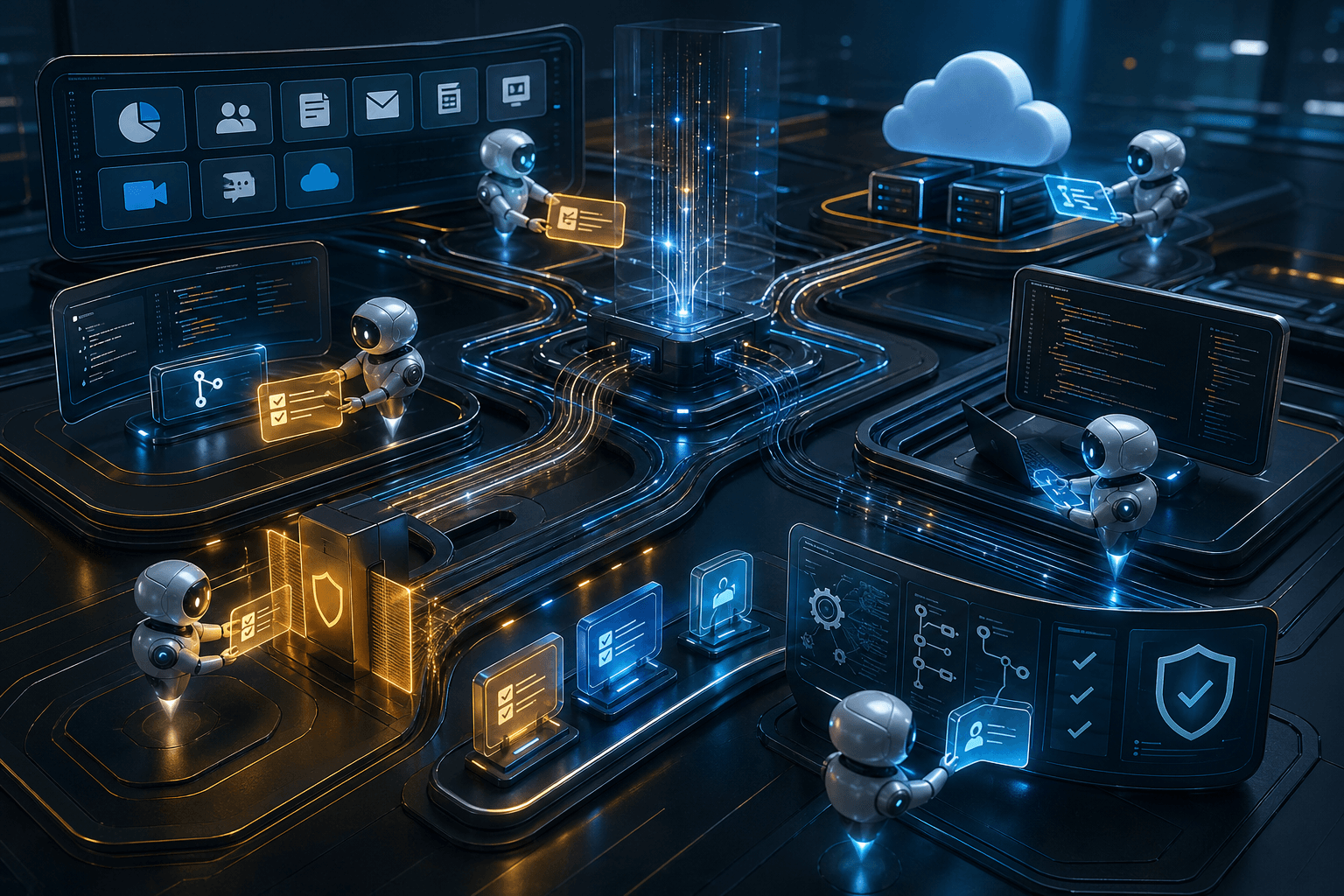
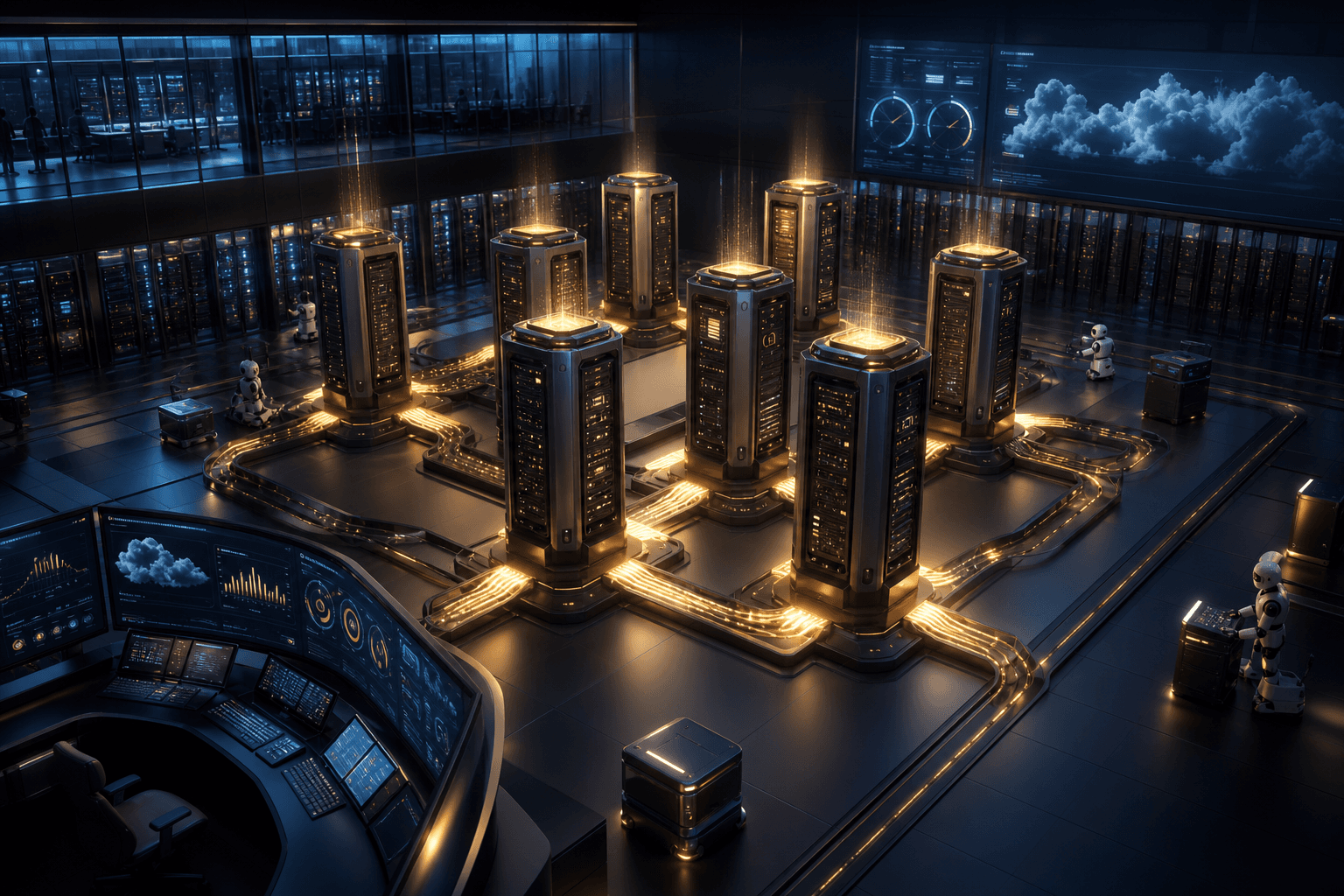
Elon Musk Unveils TERAFAB: Tesla & SpaceX Joint Chip Initiative

Summary: All the world's chip factories today produce only ~2% of what's needed for Musk's vision. Terafab aims to deliver 1 terawatt of AI compute per year – 50x more than today's global total. By building in Austin and sending chips to space via SpaceX's infrastructure, he wants to own the entire chain: AI design, chip manufacturing, robots, and space transport.
0:52 – "The Most Epic Chip Building Exercise in History"
Elon Musk makes his most ambitious technical bet yet: Terafab – a joint project between Tesla, SpaceX, and XAI to build one terawatt of compute per year. This is, according to him, "the most epic chip building exercise in history" – and he means it literally.
"We aspire to be a galactic civilization. The future where we are out there among the stars, not forever confined to one planet."
What Does This Mean? A Quick Explainer
Musk references the Kardashev Scale – a way to measure civilization advancement based on energy usage:
- Type 1: Uses most of a planet's energy
- Type 2: Harnesses a star's full energy output
- Type 3: Galactic scale
Earth is far below Type 1. We receive only about half a billionth of the Sun's energy. All of Earth's electricity production is about one trillionth of what the Sun delivers.
2:20 – "A Tiny Dust Mote in a Vast Darkness"
Musk delivers a humbling observation: Earth is so small it barely registers on the cosmic scale. The Sun accounts for 99.8% of all mass in the solar system. Jupiter is 0.1%. Earth? "Miscellaneous."
"Sometimes people ask me: What about fusion power on Earth? The answer is, unfortunately, it's extremely tiny – because the Sun is 99.8% of the mass in the solar system."
4:10 – "The Things Everyone Said Were Impossible"
Before Terafab, a recap of technologies that have already proven critics wrong:
- Tesla: Started when no one believed in electric cars. Now building 2 million EVs per year.
- XAI: Built the world's first gigawatt-scale compute facility in record time – Jensen Huang at Nvidia said he'd never seen anything built so fast.
- SpaceX: Landed over 500 rockets. Made reusable rockets economically viable.
6:28 – "Starship is a Critical Piece of the Puzzle"
To achieve one terawatt of compute per year, the requirements are staggering:
- 10 million tons of material to orbit every year
- 100 kilowatts of solar power per ton for AI satellites
- Starship V3 capable of lifting 200 tons to orbit (double from V2)
Future AI satellites are expected to reach megawatt scale – far beyond today's 100 kilowatts.
8:15 – "We Build Terafab or We Don't Have the Chips"
This is the core of the entire presentation. Musk explains why Terafab is necessary:
- Current global AI compute output: Approximately 20 gigawatts per year
- What Terafab needs: 1 terawatt per year
- What all of Earth's fabs produce combined: Only 2% of what's required
"We've told Samsung, TSMC, Micron: We'd like you to expand as quickly as you can – and we'll buy all your chips. But the maximum rate they're comfortable expanding is much less than we need. Either we build Terafab, or we don't have the chips. We need the chips. So we're going to build Terafab."
10:05 – "Everything in One Building"
The secret ingredient: A fab in Austin, Texas, where everything happens under one roof.
- Lithography masks are created
- Chips are manufactured (logic + memory)
- Chips are tested
- New masks are designed
- The whole thing becomes a fast, recursive improvement loop
"To the best of my knowledge, this doesn't exist anywhere else in the world. You've got everything needed to build logic, memory, do packaging, test it, then do the masks, improve them – and just keep looping."
Musk believes this recursive improvement is an order of magnitude better than anything else in the world.
12:30 – "10 to 100 Times More Robots Than Cars"
Two types of chips are planned:
Edge inference chips: Optimized for AI directly in the device (instead of the cloud). Primarily for:
- Optimus – Tesla's humanoid robot
- Vehicles
Musk expects humanoid robot production volume to be 10 to 100 times greater than cars. If 100 million cars are manufactured globally each year, 1–10 billion humanoid robots are expected annually.
14:45 – "Space Chips Must Withstand Radiation and Heat"
Space-optimized chips are designed for a hostile environment:
- Withstand high-energy ions and photons
- Handle electron buildup
- Run hotter to minimize radiator mass
This is a new category. Musk believes space chips will dominate:
"My guess is that space chips are the vast majority of compute – maybe 100 to 200 gigawatts per year on Earth, and about a terawatt in space. Just due to power constraints on the ground."
16:30 – "In Space, It's Always Sunny"
Here's the most surprising insight: Musk believes that within 2–3 years, it will be cheaper to send AI chips to space than to run them on Earth.
Why space solar power is superior:
- 5+ times more solar energy than on the ground (no atmospheric attenuation)
- No day/night cycle or seasonal variation
- Always perpendicular to the Sun
- Cheaper than ground-based solar (no heavy glass/weather protection needed)
- No batteries required (always sunny)
18:50 – "On Earth It Gets Harder – In Space It Gets Easier"
Musk points out a fundamental asymmetry:
Cost trend:
- On Earth: Gets more expensive and difficult over time – we start running out of easy locations, then comes NIMBY. Nobody wants the thing in their backyard.
- In space: Gets cheaper and easier over time – large-scale expansion is possible without limitations.
"When you try to increase power on Earth, you start running out of easy locations. Then comes NIMBY. Nobody wants the thing in their backyard. But in space, it actually becomes cheaper and easier over time."
19:55 – "Petawatt via the Moon's Mass Driver"
After Terafab comes the next step: Petafab.
The secret: An electromagnetic mass driver on the Moon with Optimus robots and humans.
Moon advantages:
- No atmosphere
- 1/6 of Earth's gravity
- Can accelerate directly to escape velocity – no rockets needed
"I just want to live long enough to see the mass driver on the Moon. That's going to be incredibly epic."
The goal: One millionth of the Sun's energy – a million times larger than Earth's economy.
21:00 – "If You Can Think It, You Can Have It"
Musk concludes with a vision from Iain Banks' Culture novels:
"There will be a society where there is no money. Where everyone has access to abundance. If you can think it, you can have it. That means anyone could go to Saturn."
Thoughts on how this affects the future
Tesla, SpaceX and XAI's joint investment in Terafab represents something previously found only in science fiction: a serious plan to build a galactic civilization. But what does it mean concretely for us living today?
Technically: The arms race in AI chips is taking a quantum leap. When one actor commits to producing 50 times more compute than the entire world combined, the landscape changes for everyone – from tech giants to nations.
Economically: Musk's point about space vs. Earth is thought-provoking. If it truly becomes cheaper to deploy AI in space within a few years, the center of power quite literally moves beyond Earth's limitations. Those who first master space-based compute gain a fundamental advantage.
Socially: The vision of an abundance society where "if you can think it, you can have it" is inspiring – but also frightening. Who controls this technology? How is access distributed?
Watch the full presentation on YouTube
The Forge newsletter
Get new articles in your inbox
Pick the topics you care about. No noise, at most one email a week.
We follow GDPR. Unsubscribe anytime.