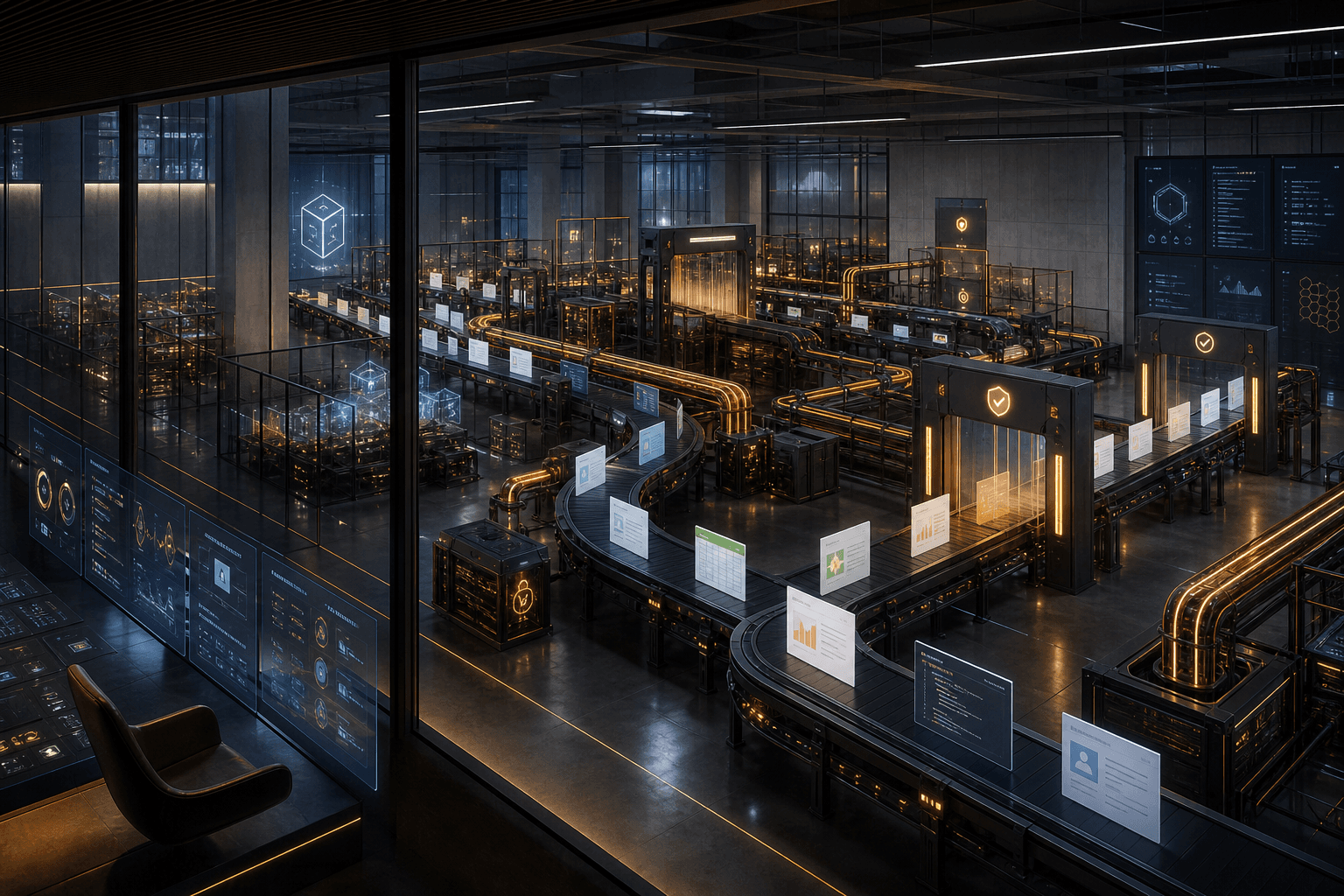
AI meeting notes: from transcripts to reviewed actions

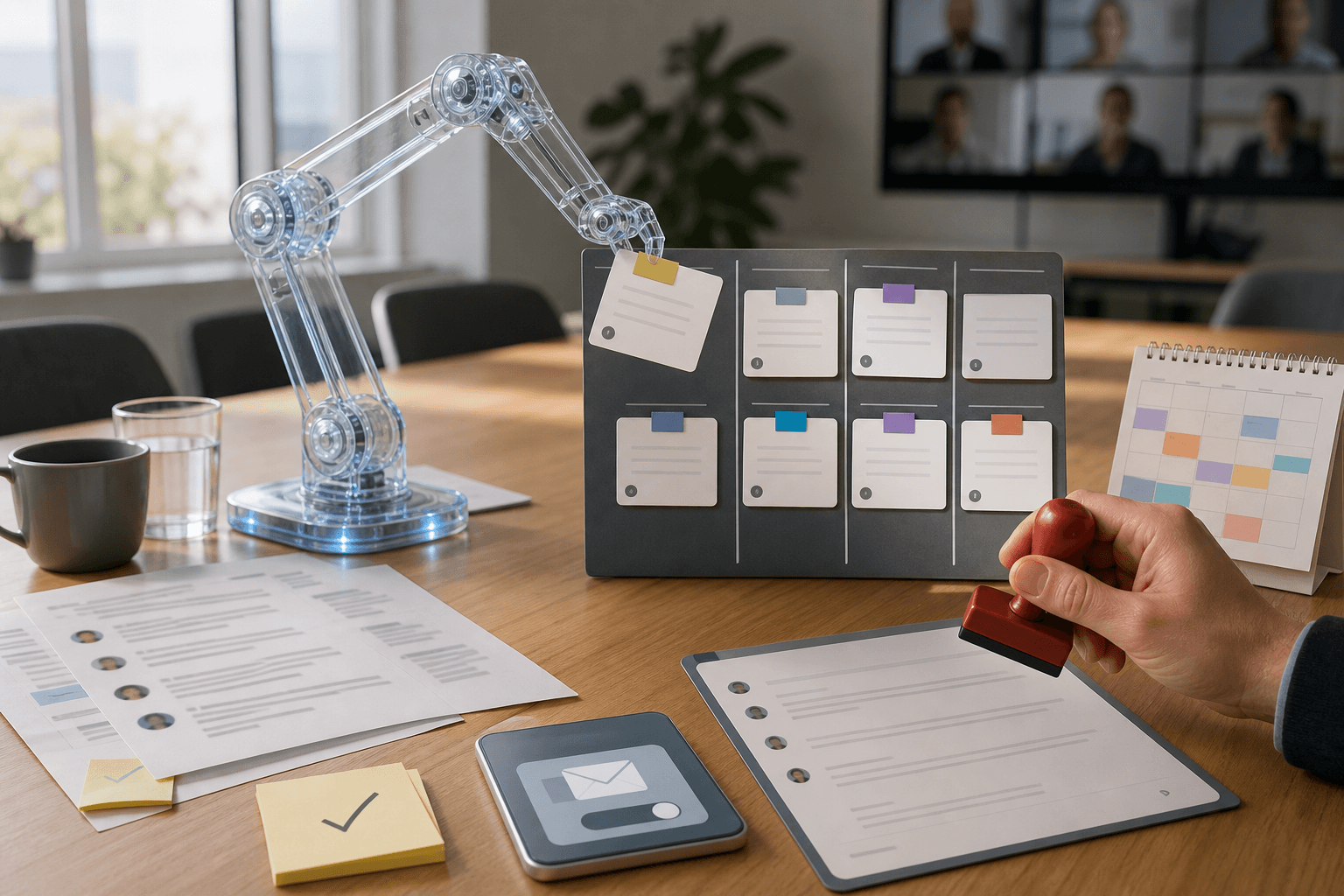
A customer meeting does not end when someone clicks "leave". It ends when the right person has the right task, the customer promise is worded carefully, and nobody sends something that should have been reviewed first.
That is where meeting AI gets useful. Not as another magic note-taker, but as a workflow: read meeting assets, pull out decisions, suggest follow-up, and stop before anything goes out.
Meeting assets means transcripts, summaries, recordings, notes, agendas, whiteboards, participant lists, and other meeting metadata. It does not mean free access to the whole company. That is exactly why the workflow needs account boundaries, source capture, and review from day one.
What actually changed
On June 9, Manus released a Zoom Connector that lets Manus work with Zoom meetings and meeting files the connected account can already access. Their examples include summarizing a customer call, extracting quotes, listing follow-ups, finding product requests, and running recurring reviews of sales calls, onboarding calls, or project meetings.
Source: Manus, "Introducing Zoom Connector: Turn Every Zoom Meeting Into Your Next Workflow"
The same day, Anthropic described how Claude Managed Agents can run on a schedule and use environment variables stored in vaults. The practical point is simple: agents can start recurring work without a separate scheduler and use stored credentials without the model seeing the secret directly. That makes weekly meeting reviews easier to run, but also easier to get wrong.
Source: Claude, "New in Claude Managed Agents" and Claude docs on scheduled deployments
Google also introduced Gemini 3.5 Live Translate: near real-time speech-to-speech translation across more than 70 languages. That matters for multilingual meetings, but Google draws an important boundary. Live Translation is not an agent. It is an interpreter pipeline for audio in and translated audio out, not a tool that should make decisions or send tasks.
Source: Google DeepMind on Gemini 3.5 Live Translate and Gemini Live API documentation
The safe first target: Monday's draft
A good first project is almost embarrassingly concrete:
Friday's customer calls become Monday's follow-up drafts.
Not automatic email. Not a new CRM mess. Just a draft with the customer's request, the decisions that were made, and the questions still open. A human approves before anything is sent, moved, or promised.
This fits meeting-heavy workflows where the same kind of conversation repeats: sales demos, onboarding, support reviews, parent or student meetings, project check-ins, and consulting calls. The win is not that AI "remembers everything". The win is that you do not start from zero after every call.
Six gates before you give AI more freedom
Build the workflow as a set of gates. Then you can increase automation without losing control.
- Decide which meetings are in scope. Pick a clear category, such as "onboarding customer calls" or "this week's project meetings".
- Check which account may read the material. AI should only see meetings, transcripts, and recordings the account is allowed to access.
- Choose what AI may produce. Start with summaries, open questions, suggested tasks, and reply drafts.
- Add a human stop before sending. Customer promises, pricing, contracts, HR matters, and sensitive details should not go out without review.
- Log source and owner. Every task proposal needs a meeting source, date, owner, and status.
- Test shutdown. Remove access for a test account and verify that the agent can no longer read the meeting or use the credential.
This is less flashy than a demo where the agent sends everything by itself. It is also much closer to how real workflows survive month two.
When recurring review is worth it
Scheduling helps when the question stays stable and the meetings change. Repeated objections in this week's sales calls are worth asking about. Promises to the next customer need more care.
A reasonable weekly routine can look like this:
- AI reads the accessible meeting assets from the week.
- It groups repeated themes, risks, and requests.
- It creates a short internal update draft.
- One responsible person approves, corrects, or stops the draft.
- Approved points become tasks in the right system.
That is enough for many organizations. It is more valuable than an agent trying to be autonomous everywhere.
Language, consent, and the wrong tone
Live translation makes the meeting workflow more useful, especially in schools, support, and international customer calls. But translated audio is not the same thing as a reviewed decision.
Write the rules before the first real use:
- Participants should know when AI translation or transcription is used
- Transcripts should be stored only when there is a clear purpose
- Sensitive meetings need a human interpreter or extra review
- Summaries should be marked as drafts
- Important decisions should be confirmed in the original language when needed
This may sound cautious. Good. Meeting AI often gets the format right before it gets responsibility right.
Start with one controlled meeting chain
If this sounds like your work, choose one meeting chain and build backward from the outcome: which decision, task, or customer reply should get better?
Hammer can help set up that Tool Forge: sources, permissions, draft templates, recurring runs, review steps, and simple logging. It is not a big AI program. It is a practical routine that turns meetings into work without letting AI send things on its own.
FAQ
What can AI do with meeting transcripts?
AI can summarize decisions, find open questions, suggest follow-ups, create tasks, and update project knowledge when the right account can access the material.
Should AI send follow-up emails automatically?
Start with drafts and human review, especially for customer promises, HR matters, contracts, pricing, or sensitive information.
How often can meetings be reviewed automatically?
Daily or weekly for recurring sales, support, onboarding, and project meetings, but each routine needs an owner, a log, and a stop rule.
Is live translation the same as an AI agent?
No. Google frames Gemini Live Translation as an interpreter pipeline for audio in and translated audio out. It should not be treated as a tool that makes decisions or sends actions.
The Forge newsletter
Get new articles in your inbox
Pick the topics you care about. No noise, at most one email a week.
We follow GDPR. Unsubscribe anytime.