Google Antigravity release notes: 2.4.3 and CLI 1.1.8 make agent runs reviewable
Part of the series: Google Antigravity release notes

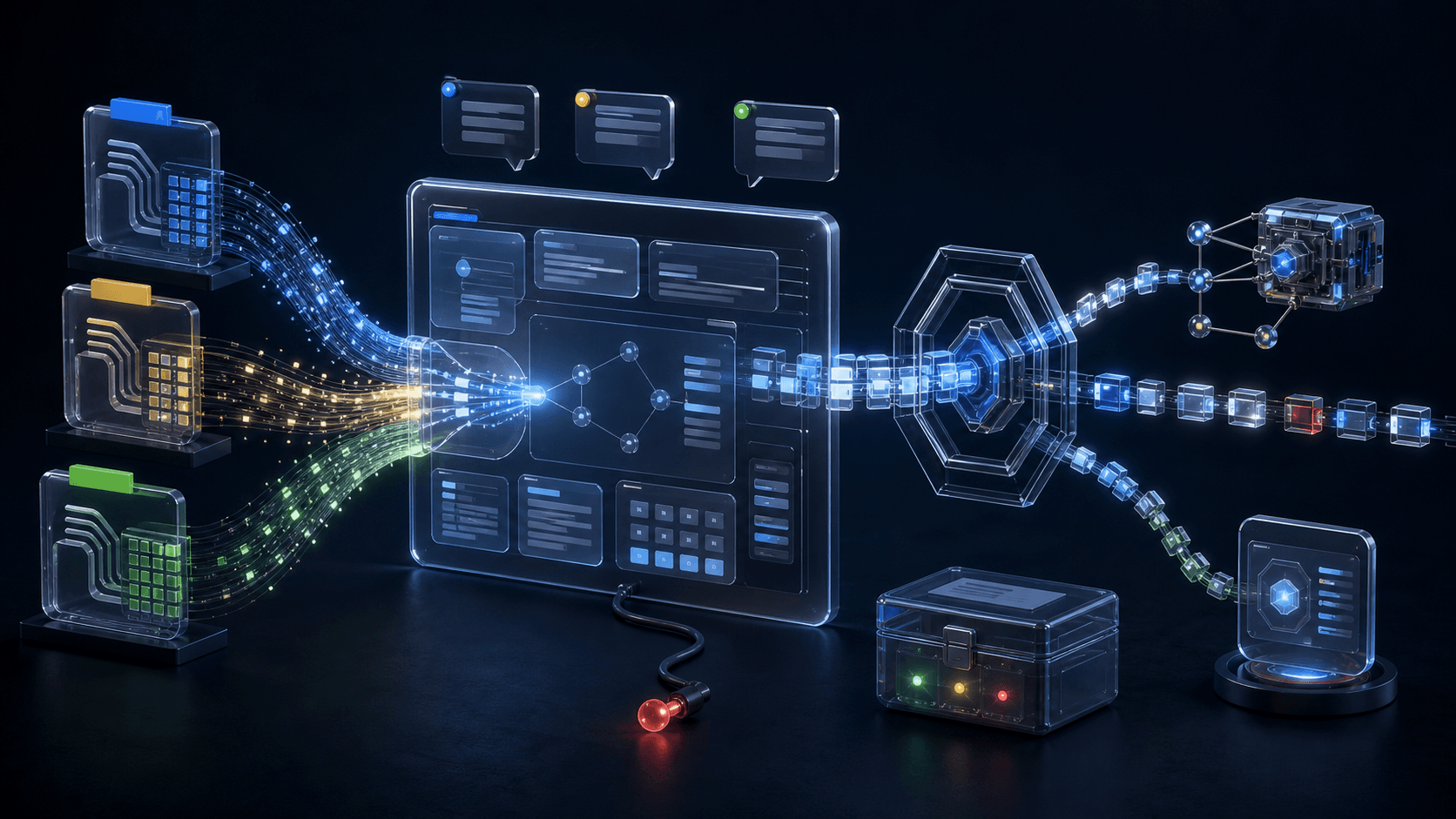
Google Antigravity received two updates on July 28 that fit together unusually well. App version 2.4.3 makes it easier to bring work material into the workspace and review an agent's work. CLI 1.1.8 can expose the same kind of run as structured data for scripts, CI workflows, and evaluations.
Google Antigravity is Google's agentic workspace for code and other multistep tasks. An agentic workspace lets AI read context, use tools, and complete several steps inside a bounded working environment.
Google Antigravity release notes: 2.4.3 improves review in the app
Antigravity 2.4.3 adds support for attaching .json, .md, and .csv files in chat. CSV files are handled as plain text. Temporary preview tabs can reuse the same slot until you promote a tab, for example by double-clicking it. Draft comments now persist across sessions.
The update also adds timeouts for MCP server connections and tool calls, which stops an agent from waiting forever on a stalled server. MCP, the Model Context Protocol, is an open protocol that connects an AI client to external tools and data sources. The command palette now includes Download Diagnostics, which downloads a troubleshooting package containing logs and agent state.
For people working directly in the interface, there are more concrete changes: Cmd+L on Mac or Ctrl+L on other systems quotes selected text into the chat input, .json and .md attachments get distinct visual badges, and Conversation History gains an Only Unread filter. Google rolls out new versions gradually, so 2.4.3 may reach different installations at different times.
Source: Google Antigravity changelog for version 2.4.3.
Antigravity CLI 1.1.8 adds structured output
CLI 1.1.8 makes print mode, -p or --print, much easier to use in automation. The --output-format flag now supports text, json, and stream-json. The last option is NDJSON, where each line is a separate JSON object. A run can therefore emit events as work progresses instead of waiting until everything is complete.
The stream uses init, step_update, and result event types. Tool calls include tool_info with the tool name, parameters, and output. Delegated subagents include subagent_info with fields such as conversation_id and log_uri. The usage object also reports cache_read_tokens.
The --json-schema flag can require the final output to follow a custom JSON schema, supplied either as an inline schema string or a path to a schema file. With stream-json, the schema applies to the terminal result event. This is the most useful change in the release: a response can be validated before another system acts on it.
Release 1.1.8 also lets an exact compound command, such as git fetch && git rebase, be saved as an always-allow rule without prompting again on the next identical run. The copyOnSelect setting is on by default and can be disabled under /settings if automatic copying on mouse selection gets in the way.
Source: Google Antigravity CLI 1.1.8 release notes.
What the updates mean for Nordic teams
Version 2.4.3 helps a person collect source material, move between files, and preserve review comments. CLI 1.1.8 helps a system consume the same work without trying to parse free-form prose. Together, they fit a workflow such as support analysis, where .csv data is reviewed in the app and the approved assessment later runs repeatedly against a fixed JSON schema.
Start with one focused workflow. Give the CLI run scoped permissions, load secrets from environment variables or a secret manager, and store tool_info, subagent_info, and the final result in the run log. A person should approve the schema and any action that can write back to an operational system.
This is a natural Tool Forge task: connect the agent to the right sources, define a stable output contract, and put review at the point where it is needed.
Short example: use the new Antigravity feature
Human step: Open the right project in Antigravity 2.4.3 and attach a .csv, .json, or .md file from a real workflow. First confirm that the version has reached your installation.
Then paste this to the agent:
Read the attached operations file. Produce a review brief with: anomalies that require a decision, the exact row or key behind each conclusion, the proposed next action, and missing information. Do not change files or run commands.
Good output should:
- Link each conclusion to a row, column, or JSON key.
- Separate observations from proposed actions.
- Mark anything that needs a human decision.
- Translate cleanly into a JSON schema for a later CLI run.
Source for attachment and version details: Google Antigravity 2.4.3 changelog.
What to test today
Take a recurring report or export that your team already reviews. Run the task in 2.4.3 first, using comments and source references. Then define the smallest stable JSON result that the next system needs and try the same task in CLI 1.1.8 with json or stream-json. Check the final result, tool calls, subagent log links, and token accounting before the workflow writes anything downstream.
FAQ
What is new in Google Antigravity 2.4.3?
Version 2.4.3 adds JSON, Markdown, and CSV attachments, temporary preview tabs, persistent draft comments, MCP timeouts, and the Download Diagnostics command. Google is rolling the version out gradually.
What does stream-json mean in Antigravity CLI 1.1.8?
It is an NDJSON stream that emits init, step_update, and result events as the run progresses. It can also include tool_info for tool calls, subagent_info for delegated agents, and usage data including cache_read_tokens.
Does a team need both Antigravity 2.4.3 and CLI 1.1.8?
No. The app suits human review of files and comments. The CLI release suits scripts, CI workflows, and evaluations that need structured, schema-validated output. They can also be used in the same workflow.
The Forge newsletter
Get new articles in your inbox
Pick the topics you care about. No noise, at most one email a week.
We follow GDPR. Unsubscribe anytime.