Google Antigravity release notes: CLI 1.1.6–1.1.7 clarifies agent roles and approvals
Part of the series: Google Antigravity release notes
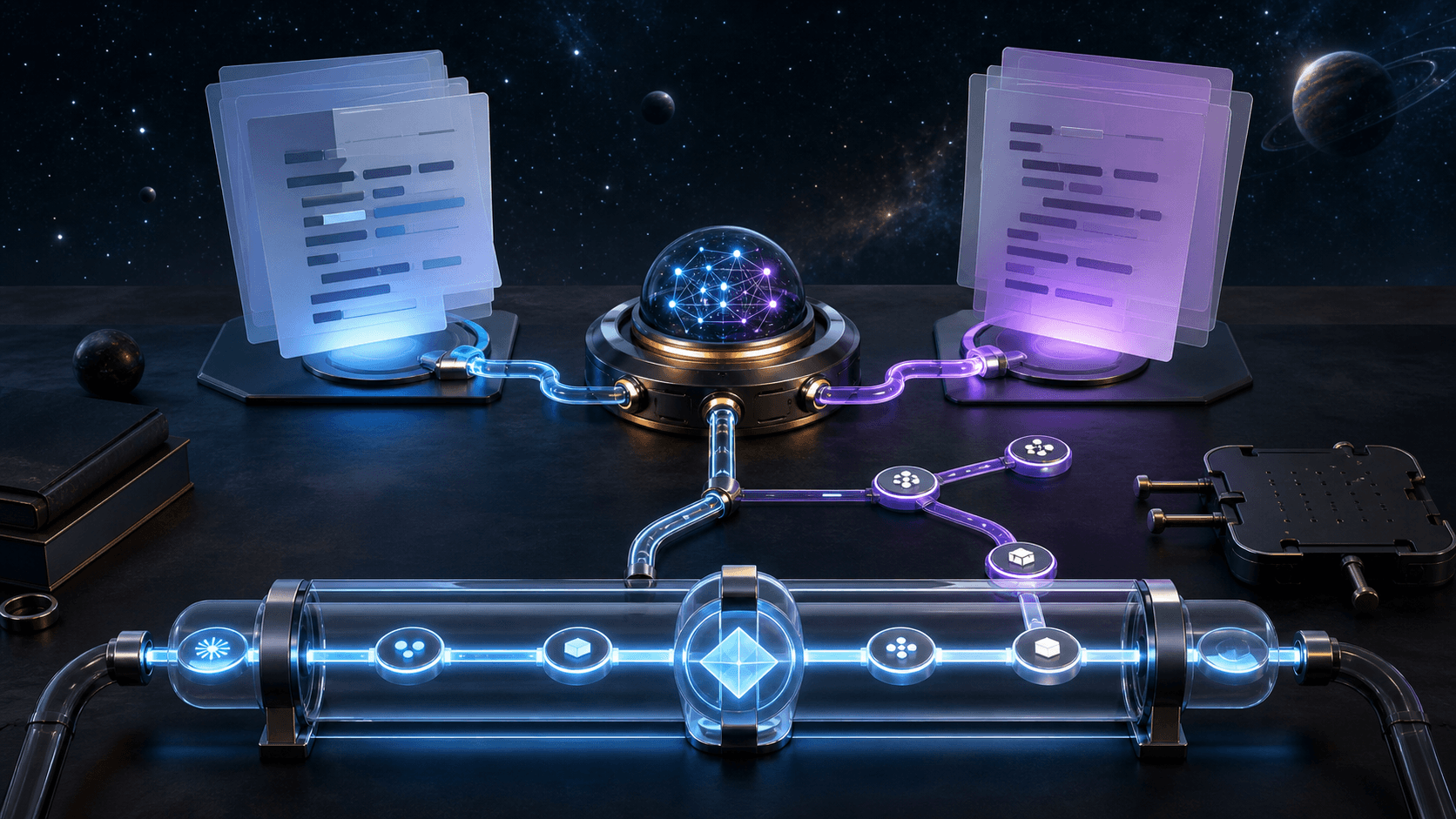
An agent role is not very useful if it exists only as a setting on one computer. Google Antigravity CLI 1.1.6 moves custom agents into readable Markdown files. Version 1.1.7 follows with an important detail: when a compound shell command needs approval, the user sees the whole command.
Google Antigravity CLI is the terminal interface for Antigravity, Google's agentic development platform. A custom agent is a reusable role with its own instructions and boundaries. YAML front matter is metadata at the top of a Markdown file and can control how the role may be used.
Google Antigravity release notes: what changes in CLI 1.1.6?
Version 1.1.6 was published on July 24, 2026. Custom agents can now be defined in agent.md with YAML frontmatter and a system prompt delimited by an H1 heading. The verified fields are mainAgent, subagent, hidden, inheritMcp, and commandExecutionPolicy. Dynamically created subagents made through define_subagent also write Markdown, so they resolve in external builds.
This makes the role easier to read and review alongside the rest of a workflow. The release notes do not state a universal file path, though. Do not add a made-up installation path and present it as official.
The same release improves plugin skill discovery by reading both skills.json and the skills/ directory. /codesearch now streams results and can be cancelled with Esc. /copy <n> copies the n-th most recent response, while /copy and /copy 1 still copy the latest.
Source: Google Antigravity CLI 1.1.6 release notes.
CLI 1.1.7 makes approval easier to trust
Version 1.1.7 was published on July 26, 2026. If any part of a compound shell command needs approval, the prompt now shows the full command. A compound command contains several parts that run together, for example through a pipe or conditional chain. Showing the full line gives the reviewer the context needed before execution.
Disabled plugins should no longer continue to run hooks or contribute other customizations. This fixes a frustrating case where a broken hook could keep blocking file-editing tools after the plugin had been turned off. A hook is code that runs at a defined event in the agent workflow.
MCP OAuth is also more tolerant of providers that do not follow the specification strictly. The release notes name Salesforce and Atlassian, relaxed issuer validation, and inclusion of the refresh_token grant. MCP, the Model Context Protocol, connects the agent to external tools and data sources.
Source: Google Antigravity CLI 1.1.7 release notes.
What teams can test now
For a team using Antigravity in development or automation, the two releases fit together. Write the role in a form that people can review. Then verify that the selected role, plugin state, and command policy still match when the work runs.
When Antigravity connects to Salesforce, Atlassian, or another MCP service, use scoped access and managed authentication. Put the approval point immediately before writes or external actions, then record the command, decision, and result in the run log. The update makes the flow clearer, but it does not choose the right permission level for the team.
Short example: use the new Antigravity feature
Human step
Open Google Antigravity CLI 1.1.7. If a Markdown-based custom agent already exists in your environment, open /agents and choose the role you want to test. The release notes confirm both the Markdown format and /agents, but do not provide a universal directory for agent.md. Follow the documentation for your installation instead of guessing a path.
Source for the format and /agents: Google Antigravity CLI 1.1.6 release notes.
Then copy the agent instruction:
Work within the selected agent role's existing boundaries.
Start with a read-only receipt showing the role, main-agent or subagent status, inherited MCP access, command policy, and active plugin hooks.
Propose the next action without editing files.
If a compound shell command is needed, show the full command and stop for human approval.
A good response should:
- Describe the active role without inventing missing settings.
- Separate inherited MCP access from local tools.
- Show any plugin hooks that actually affect the run.
- Stop before a file edit or command execution.
This test fits Tool Forge when several agent roles, plugins, and MCP connections need to become one operating routine with clear approvals and run logs.
FAQ
What is a Markdown agent in Google Antigravity CLI 1.1.6?
It is a custom agent defined in an agent.md file with YAML frontmatter and an H1-delimited system prompt. The frontmatter can control whether the role is a main agent or subagent, whether MCP is inherited, and which command policy applies.
What changes in Antigravity CLI 1.1.7 command approvals?
When any part of a compound shell command needs approval, the permission prompt now shows the full command. This gives the reviewer the context needed to make the decision.
What does Antigravity CLI 1.1.7 fix for plugins and MCP?
Disabled plugins should no longer run hooks or contribute other customizations. MCP OAuth was also adjusted for providers such as Salesforce and Atlassian through relaxed issuer validation and inclusion of the refresh_token grant.
The Forge newsletter
Get new articles in your inbox
Pick the topics you care about. No noise, at most one email a week.
We follow GDPR. Unsubscribe anytime.