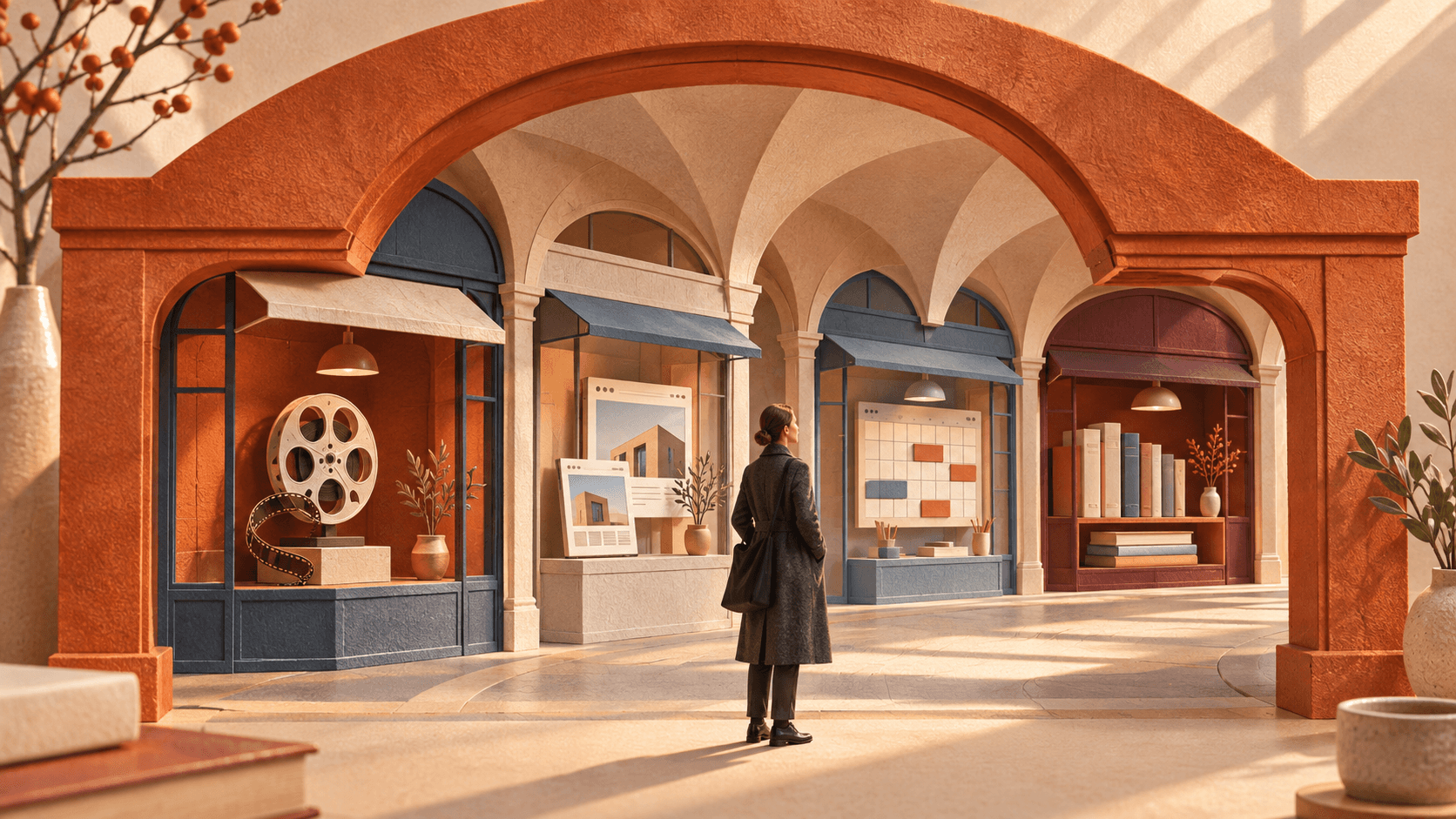
“Can we go through the blue door?”
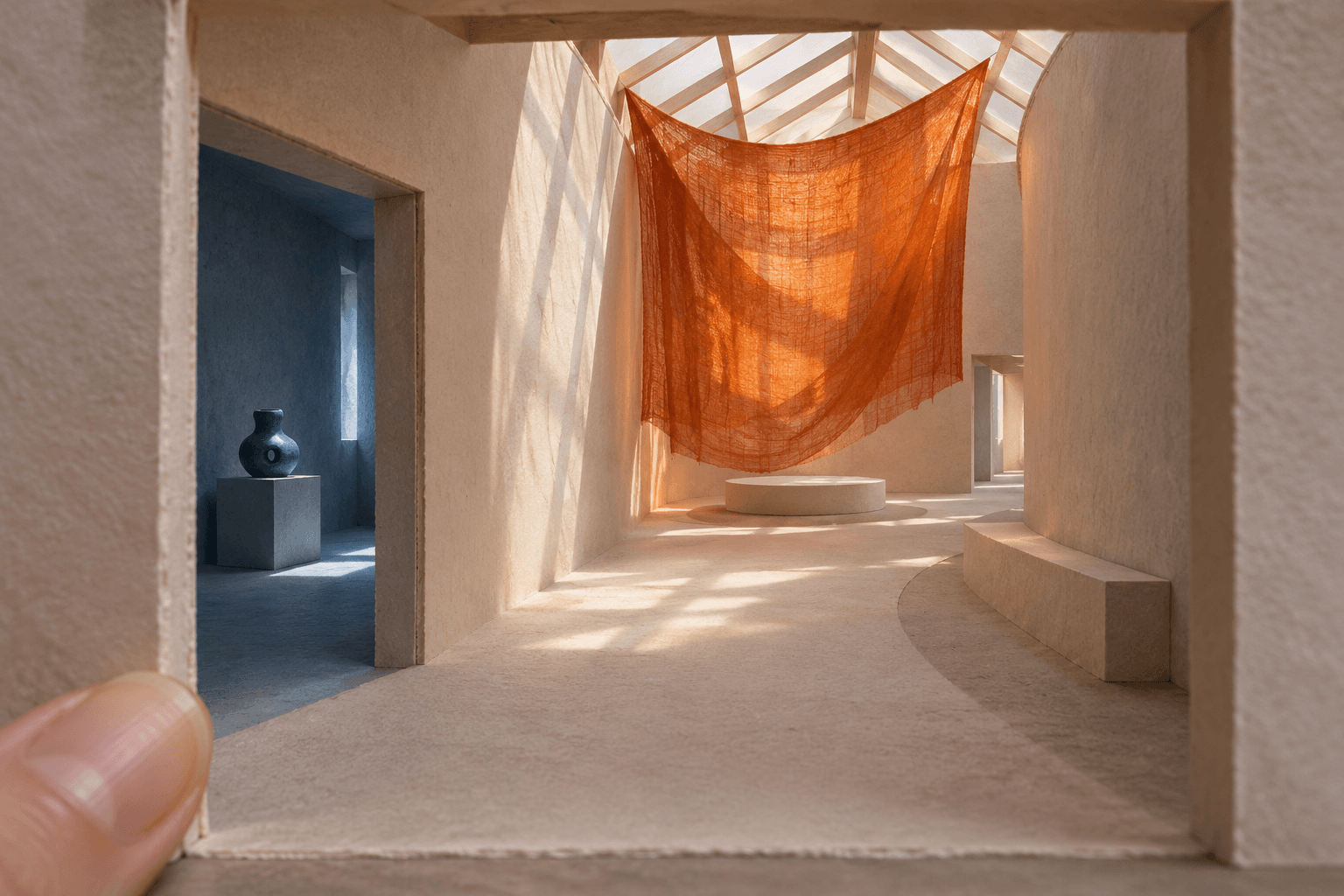
Imagine pitching an exhibition. Your film opens on an orange textile hanging under a skylight. The client interrupts: “What’s through that blue door on the left?” You cut that shot last Tuesday. With Google’s Genie 4, you could hand over the controls and find out why the side room caught their eye.
A camera the client can steer
On November 18, Google began rolling out Genie 4 in Project Genie to eligible Google AI Ultra subscribers. On November 19, it opened developer access through Google AI Studio and the paid Gemini API. A world model like Genie generates the next sights and sounds as someone moves through a scene. A reference image or a written description can set the starting point. During the session, a visitor can turn with the keyboard or ask for a change in lighting.
Source: Google’s Genie 4 developer announcement
What the turn to the left tells a designer
In our imagined gallery, the client walks past the main piece and goes straight to a small ceramic vase in the blue room. Ask what drew them there. Perhaps a glimpse of one object through a doorway made them curious. Perhaps they simply mistook it for the entrance. Those answers call for different changes to the same sketch.
An interactive pitch earns its place when the visitor has a meaningful choice. For the next concept review, a designer could put one sentence in the brief: “At the entrance, I want to see which room my client chooses, and hear why.” One client’s answer can inform the next drawing. It takes actual visitors to learn how an exhibition audience behaves.
When to go back to the floor plan
Turn around in Genie and a doorway can shift. Google explains that the model generates a moving sequence of views without keeping a fixed 3D model of the room. Use the session to discuss the glimpse of blue. Use a measured plan to settle whether a display case fits through the door. If the commission is a film with a precisely timed reveal, the editor should keep the camera.
Source: Google’s guide to interactive world generation and its limits
The English-language episode takes a wider look at November 16–22, including OpenAI’s voice calls that can wait on standby, Anthropic’s Google Docs editing interruption, Grok’s accounting case and Mistral’s workflow release candidate. This AI-generated masterclass was produced with NotebookLM from Hammer Automation’s daily research into AI providers’ updates and features.
FAQ
How much does a live Genie 4 API session cost?
Google quotes about $0.10 per second of generated video with sound, or roughly $6 per minute. Input is separate. The app should end the session explicitly; closing the browser tab can leave generation running.
What should a designer bring to the meeting?
A sketch or a short written description of the entrance is enough to start. Pick one decision the client can make, such as which room to enter first, and leave time to ask why.
The Forge newsletter
Get new articles in your inbox
Pick the topics you care about. No noise, at most one email a week.
We follow GDPR. Unsubscribe anytime.