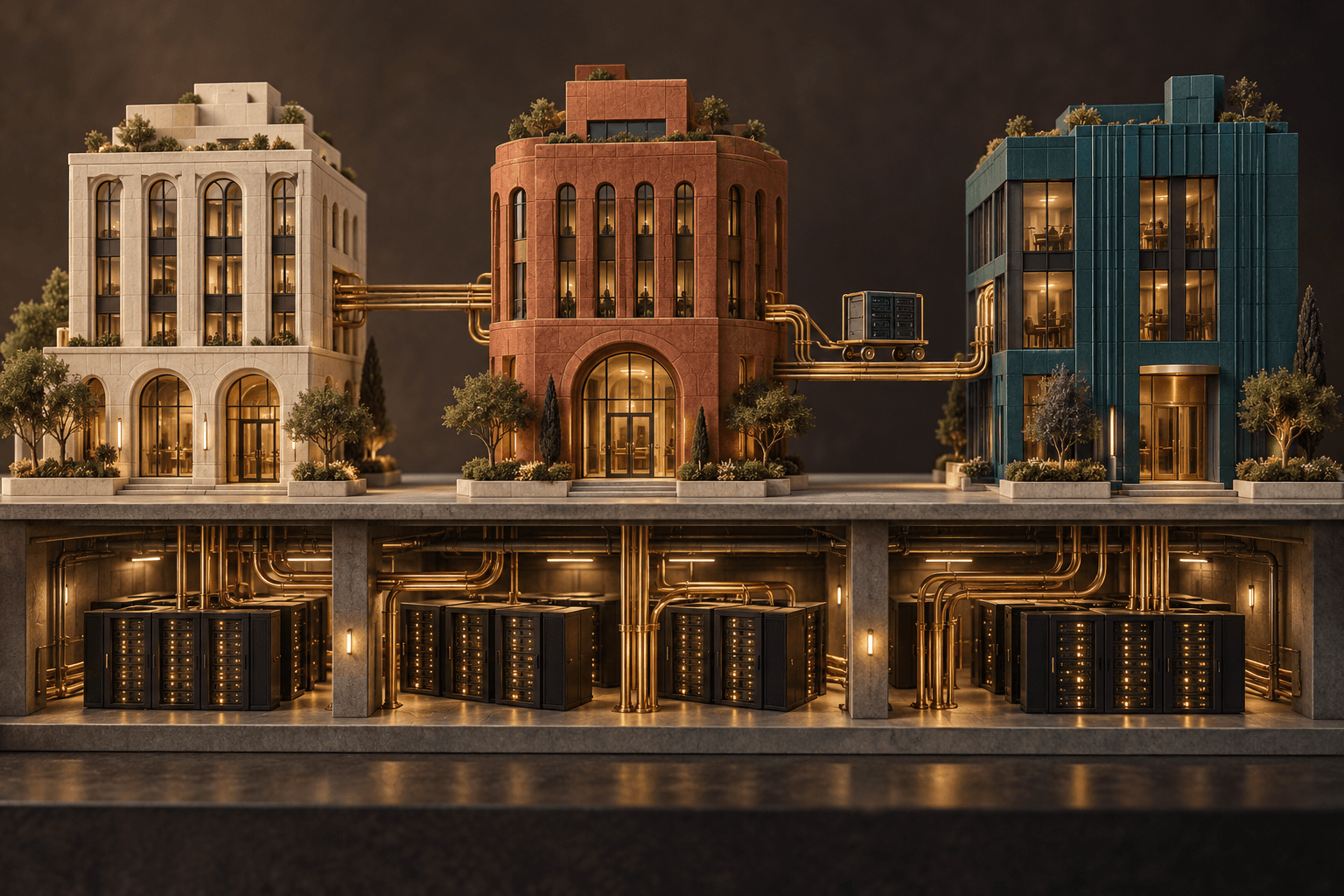
AI agents are becoming workbenches: what small teams should test now

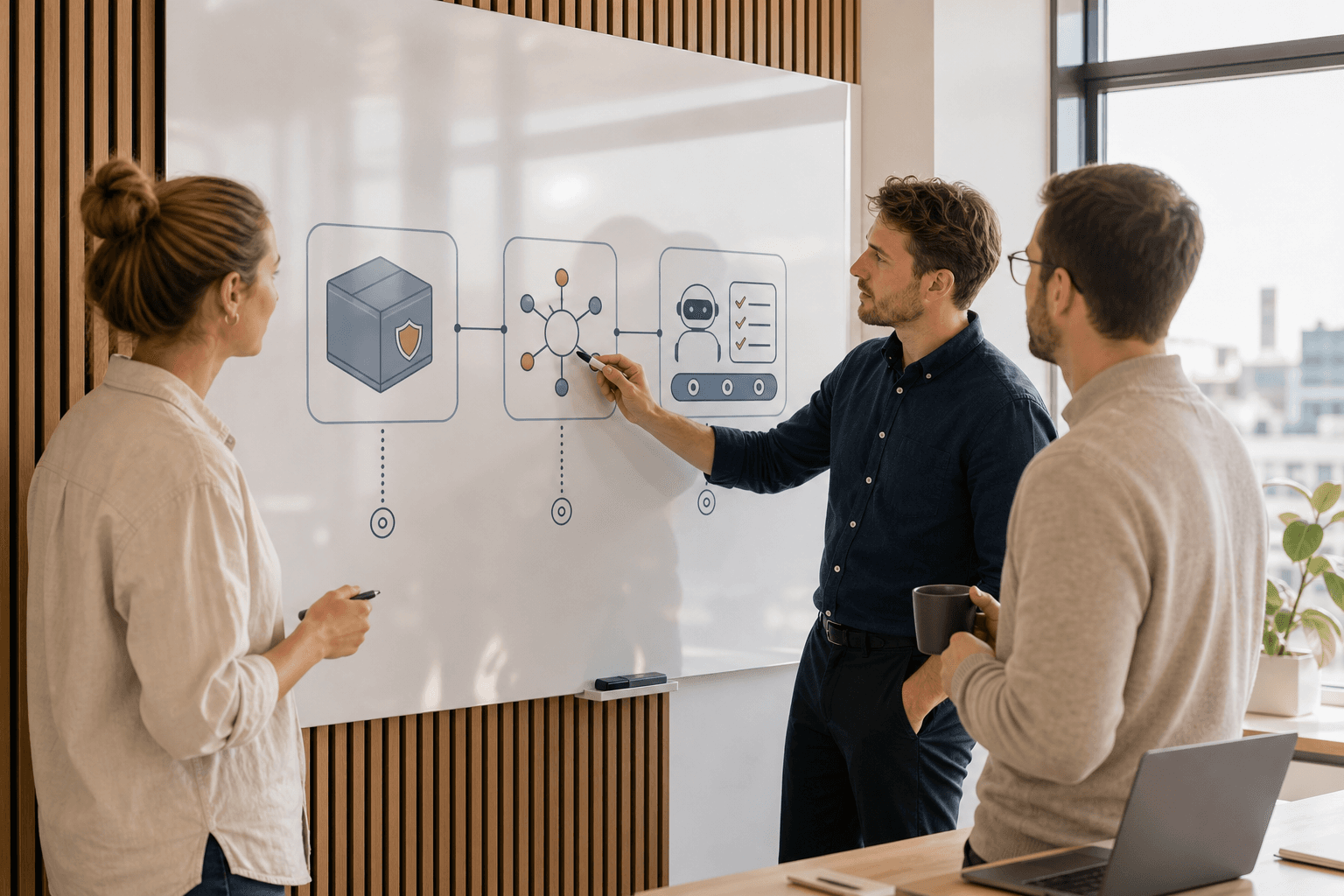
AI productivity is leaving the demo stage. The strongest current signals are not about yet another chatbot, but about work environments where AI gets safe tools, clear boundaries, and measurable tasks. For small teams, the useful question is simpler: which recurring workflow can we let AI prepare, check, or follow up this week?
What is changing: the agent gets a real workbench
An agentic workflow is a flow where AI does not only answer with text, but plans the next step, uses tools, and returns a result that can be reviewed. OpenAI describes Codex as an environment where the agent runs inside a controlled flow with instructions, tools, sandboxing, and explicit permissions. With the Codex GitHub Action, organizations can run Codex in GitHub Actions for code review, release preparation, and repeatable CI tasks.
For non-technical teams, GitHub itself is not the main point. The important pattern is this: AI is moving into a workbench where the task, data, tools, and safety level are defined in advance.
Source: OpenAI Developers – GitHub Action – Codex
Source: openai/codex-action on GitHub
MCP makes tool connections more standardized
MCP, Model Context Protocol, is an open standard for connecting AI applications to external systems, data sources, and tools. MCP describes how an AI client can discover resources, call tools, and use predefined prompts in a more consistent way.
For Hammer readers, the practical point is this: when more AI tools support the same connection pattern, it becomes easier to build automation workflows that can switch model, client, or vendor without rebuilding the entire process from scratch.
Source: Model Context Protocol – What is MCP?
Source: Model Context Protocol specification 2025-11-25
Microsoft points toward governance and operations, not only agent building
Microsoft’s Copilot Studio plan for 2026 wave 1 describes the agent platform as a way to build AI agents and agentic workflows with security, governance, evaluation, and operational control. Workflow automation means recurring steps in a process are performed or prepared automatically according to clear rules.
For smaller organizations, this is a reminder: do not start with “we need an agent.” Start with “which process needs better control, shorter lead time, or fewer manual handovers?”
Source: Microsoft Learn – Microsoft Copilot Studio 2026 release wave 1
Claude Code shows why safety rails matter
Anthropic has previously highlighted features such as checkpoints, subagents, hooks, and background tasks in Claude Code. A sandbox is a bounded environment where an AI agent can work without unlimited access to the rest of the system. Hooks are automatic checks or actions triggered at specific steps, such as running tests after a change.
Even though Claude Code is built for developers, the lesson is broader: more autonomy requires more traceability. When AI is allowed to do more, the team must be able to see what it did, stop mistakes, and roll back.
Source: Anthropic – Enabling Claude Code to work more autonomously
Who this matters for
This is relevant if you lead or run an organization where the same kind of information work returns every week:
- Small business owners: customer requests, quotes, follow-ups, and internal documentation.
- Solo operators: administration, research, publishing, and invoicing material.
- Schools: support material, policy drafts, lesson planning, and safe AI routines for staff.
- Customer service or back office teams: cases that need to be summarized, prioritized, and handed over without losing context.
You do not need to start with a large platform. It is often enough to choose a narrow workflow where AI gets clear inputs, a checklist, and a human decision at the end.
What to test today
Choose a process that takes 30–90 minutes every week and write down three things:
- Starting signal: what triggers the work, such as an email, a form, a file, or meeting notes?
- Allowed tools: which systems may AI read from or write to?
- Review point: where must a human approve before anything is sent, published, or booked?
This is a good first step for Mindset Forge: not to buy a tool immediately, but to define which part of the work is actually suitable for AI support. If the flow is stable, the next step can be Tool Forge, where integrations, templates, and safety boundaries are set up in practice.
What to watch next
Track three development paths:
- Standards: MCP and similar protocols that make tool connections more portable.
- Operating environments: agent tools with sandboxing, permissions, logs, and recovery.
- Evaluation: features that measure whether the agent actually saves time without creating more control work.
For small teams, the winner will not be “the most autonomous AI.” The winner will be the AI that can work within reasonable boundaries and hand over clear results.
Thoughts on how this affects the future
AI productivity will increasingly be about work design. Companies that describe their processes clearly will get more value from new models than companies that only test new chat windows. As standards like MCP, safer agent environments, and governed automation flows mature, the next competitive advantage will be knowing which parts of work should be automated, which should be amplified, and which still require human judgment.
The Forge newsletter
Get new articles in your inbox
Pick the topics you care about. No noise, at most one email a week.
We follow GDPR. Unsubscribe anytime.